
Por Sergio León Cervantes / Grupo Cantón
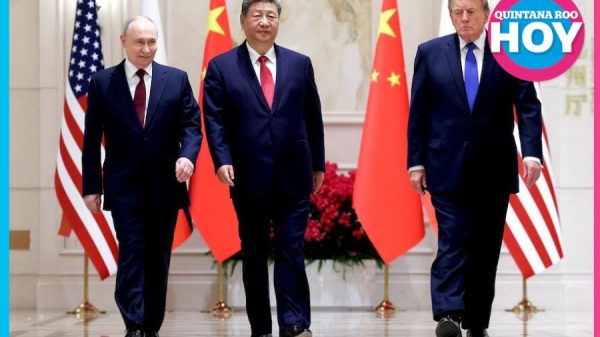
APEC no es una fotografía de mandatarios: es uno de los espacios donde se construye el futuro del comercio mundial.
Nació en 1989 con 12 economías ante la integración del Pacífico.
Hoy reúne 21, que concentran 61% del PIB mundial, 46% del comercio de bienes y servicios y casi 3,000 millones de habitantes.
Sus acuerdos transformaron la región. Las Metas de Bogor de 1994 impulsaron la apertura comercial; Osaka, en 1995, trazó el camino.
Entre 2007 y 2010, APEC redujo 5% los costos de transacción comercial, con ahorros estimados en 58,700 millones de dólares.
No es un tratado de libre comercio ni elimina aranceles automáticamente: promueve cooperación y mejores condiciones para comerciar.
México ingresó en 1993, durante su apertura internacional. Participar nos acerca a Estados Unidos, China, Japón y otras economías que influyen en inversión, cadenas productivas y competitividad. Estar en la mesa importa; aprovecharla, más.
En Shenzhen, APEC presentó su marco de digitalización comercial 2027-2030: documentos electrónicos, firmas interoperables y aduanas más ágiles.
La lógica: combatir irregularidades con mejores datos y menos papeleo, sin renunciar al control.
México enfrenta una prueba distinta. La reforma a la Ley Aduanera publicada en octubre de 2026 entrará en vigor el 1 de enero de 2027.
Refuerza la revisión de valores declarados y modifica supuestos de embargo precautorio.
Combatir la subvaluación es necesario; evitar que diferencias legítimas de precio provoquen retrasos, garantías y cargas inmovilizadas también.
Las cifras obligan a medir. México importó 664,066 millones de dólares en 2025. Si las fricciones añadieran costos equivalentes a 0.1% de ese valor, serían 664 millones de dólares anuales.
Es un escenario ilustrativo, no una pérdida demostrada. Ahorrar el equivalente a 0.25% con mejores procesos representaría unos 1,660 millones anuales, también hipotéticos.
¿Dónde deberíamos estar? En aduanas con expediente digital único, inspecciones por riesgo, despacho anticipado, criterios uniformes y tiempos públicos medibles.
En Quintana Roo, cada demora puede encarecer insumos para hoteles, restaurantes, comercio y construcción.
La contradicción es evidente: acabamos de participar en una reunión de 21 economías que representan 61% del PIB mundial, donde se promueve un comercio más abierto, ágil y digital.
México comparte esa visión, pero su reforma aduanera podría añadir obstáculos cuando deberíamos eliminarlos.
¿De qué sirve sentarnos a la mesa donde se construye el futuro del comercio mundial si, al regresar a casa, seguimos levantando barreras para competir?
¡Hasta la próxima semana, con nuevos retos y oportunidades!
Sin miedo a la cima, porque el éxito ya lo tenemos.
Mexico: Swimming Against the Current
The Roar of the Lion
By: Sergio León Cervantes
APEC is more than a photo opportunity for world leaders. It is one of the forums helping shape the future of global trade. Founded in 1989 by 12 economies as the Pacific region became increasingly integrated, it now brings together 21 economies representing approximately 61% of global GDP, 46% of trade in goods and services, and nearly three billion people.
Its initiatives have helped transform the region. The 1994 Bogor Goals promoted open trade and investment, while the 1995 Osaka Action Agenda outlined the path forward. Between 2007 and 2010, APEC achieved a 5% reduction in trade transaction costs, generating estimated savings of US$58.7 billion. APEC is not a free trade agreement, nor does membership automatically eliminate tariffs. Its strength lies in cooperation and making trade more efficient.
Mexico joined in 1993, as it expanded its participation in international markets. Membership provides a platform for engagement with the United States, China, Japan, and other economies shaping investment, supply chains, and competitiveness. Having a seat at the table matters. Making the most of it matters even more.
In Shenzhen, APEC introduced its Trade Digitalization Cooperation Framework for 2027–2030, promoting electronic documents, interoperable digital signatures, and more efficient customs procedures. The principle is straightforward: use better data and less paperwork to combat irregularities without weakening oversight.
Mexico now faces a different challenge. Customs legislation amended in October 2026 will take effect on January 1, 2027. It strengthens customs valuation reviews and modifies provisions governing precautionary seizures. Fighting undervaluation is essential, but so is preventing legitimate price differences from triggering delays, additional guarantees, and immobilized shipments.
The economic exposure is substantial. Mexico imported US$664.1 billion in goods in 2025. If additional trade friction generated costs equivalent to just 0.1% of that value, the annual impact would reach US$664 million. This is an illustrative scenario, not a proven loss. Conversely, efficiency improvements equivalent to 0.25% could represent approximately US$1.66 billion in annual savings, also hypothetical.
Where should Mexico be heading? Toward customs operations built around unified digital records, risk-based inspections, advance clearance, consistent criteria, and publicly measurable processing times. In Quintana Roo, every delay can increase costs for hotels, restaurants, retailers, and construction companies.
The contradiction is striking: we have just participated in a gathering of 21 economies representing 61% of global GDP, promoting more open, faster, and more digital trade. Mexico shares that vision, yet its customs reform risks adding barriers precisely when we should be removing them. What is the point of sitting at the table where the future of global trade is being shaped if, once back home, we continue putting obstacles in our own path to competitiveness?
¡ Until next week, with new challenges and opportunities!
Fearlessly reaching the top, because we already have success.
X: @Oigres14 | IG: @sergioleoncervantes | Mail: sergioleon@sergioleon.mx
Te podría interesar: “La nueva realidad aduanera” – El Rugido del León