
La revisión del T-MEC ya empezó. No es una amenaza futura, es una realidad en curso. Y México no llega en su momento más fuerte.
El crecimiento es moderado, la inflación sigue presionando y el entorno global está fracturado. Pero el verdadero problema no es económico, es estratégico. Estados Unidos ya dejó clara su postura: quiere una Norteamérica más cerrada, más autosuficiente y menos dependiente de Asia.
Esto cambia completamente el juego. El T-MEC dejó de ser un tratado comercial para convertirse en un instrumento geopolítico.
Aquí viene la verdad incómoda: Quintana Roo depende del T-MEC más de lo que cree.
No por exportaciones industriales, sino por lo que realmente mueve su economía: el costo del combustible, el precio de los vuelos, la confianza del turista norteamericano, la estabilidad del tipo de cambio y el costo de los insumos que sostienen hoteles, restaurantes, parques y comercios.
En Quintana Roo, el T-MEC no se mide en toneladas exportadas. Se mide en ocupación hotelera, en tarifas aéreas y en consumo turístico.
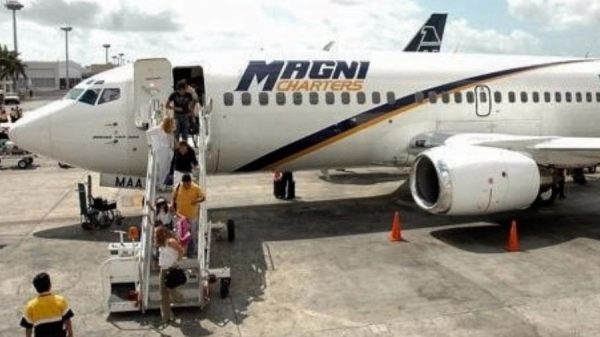
Hoy hay señales que no podemos ignorar. El tráfico aéreo en Cancún ya mostró retrocesos. No es crisis, pero tampoco es garantía. El turismo dejó de ser automático. Hoy compite por precio, facilidad y eficiencia.
Al mismo tiempo, el tema energético se convirtió en un punto de fricción central. La incertidumbre en permisos, operación e infraestructura no es un debate técnico; es un factor que impacta directamente el costo país. Y cuando el costo país sube, Quintana Roo lo resiente primero: en vuelos más caros, en operación más costosa y en menor competitividad frente a otros destinos.
La presión sobre las cadenas de suministro también es evidente. Estados Unidos quiere producir dentro de la región. Eso puede beneficiar a México, pero también puede encarecer insumos si no se maneja con inteligencia. Y Quintana Roo, altamente dependiente de importaciones, es especialmente vulnerable a ese ajuste.
A esto se suma un elemento que muchos siguen subestimando: el mundo se está tensando.
La guerra entre Irán e Israel está presionando los precios del petróleo.
El conflicto entre Ucrania y Rusia sigue afectando energía y alimentos.
La tensión entre China y Taiwán mantiene en riesgo una de las rutas comerciales más importantes del planeta.
Y los choques en el Mar del Sur de China refuerzan la percepción de que Asia ya no es una región estable para depender de ella.
Esto no cambia el texto del T-MEC, pero sí cambia la lógica de la negociación.
Mientras más inestable es el mundo, más valiosa se vuelve Norteamérica. Y mientras más valiosa se vuelve Norteamérica, más exigente se vuelve Estados Unidos.
México tiene una oportunidad histórica: convertirse en el gran ganador del reordenamiento global. Pero esa oportunidad no se va a materializar sola.
No se gana con discursos. Se gana con ejecución.
Se gana con energía suficiente y competitiva.
Se gana con conectividad aérea eficiente.
Se gana reduciendo costos logísticos internos.
Se gana generando certeza para la inversión.
Y aquí es donde Quintana Roo tiene que cambiar su narrativa.
No puede seguir viéndose sólo como un destino turístico. Tiene que posicionarse como un nodo económico del Caribe, capaz de aprovechar el flujo comercial, el consumo internacional y la relocalización de cadenas desde una lógica distinta: servicios, distribución, logística y valor agregado.
Porque si México logra proyectar estabilidad y competitividad, el beneficio será inmediato: más inversión, más empleo, más turistas y mayor gasto.
Pero si proyecta incertidumbre, el impacto también será inmediato.
Menos vuelos.
Más caros.
Turistas más cautelosos.
Menor consumo.
El T-MEC no se va a ganar únicamente en la mesa de negociación. Se va a ganar en la percepción que México logre proyectar frente a sus socios.
Y Quintana Roo será el primer termómetro.
Porque aquí no se negocian aranceles.
Aquí se negocia algo mucho más sensible:
la decisión de un turista de venir… o no.
¡Hasta la próxima semana, con nuevos retos y oportunidades!
Sin miedo a la cima, porque el éxito ya lo tenemos.
USMCA: Win or Lose Everything
The Roar of the Lion
By: Sergio León Cervantes
The USMCA review has already begun. It is no longer a future scenario—it is happening now. And Mexico is not entering from a position of strength.
Growth is moderate, inflation remains a concern, and the global environment is increasingly fragmented. But the real issue is not economic—it is strategic. The United States has made its position clear: it wants a more closed, self-sufficient North America, less dependent on Asia.
This changes the entire game. USMCA is no longer just a trade agreement—it is a geopolitical instrument.
Here is the uncomfortable truth: Quintana Roo depends on USMCA more than it realizes.
Not through industrial exports, but through what truly drives its economy: fuel costs, airfare prices, North American consumer confidence, exchange rate stability, and the cost of imported goods that sustain hotels, restaurants, parks, and commerce.
In Quintana Roo, USMCA is not measured in export volumes.
It is measured in hotel occupancy, airfare pricing, and tourist spending.
There are warning signs we cannot ignore. Air traffic in Cancún has already shown declines. This is not a crisis—but it is no longer automatic growth. Tourism is now a competitive decision based on price, accessibility, and efficiency.
At the same time, energy has become a central point of tension. Regulatory uncertainty is not a technical debate—it directly impacts country risk. And when country risk rises, Quintana Roo feels it first: higher flight costs, more expensive operations, and reduced competitiveness.
Supply chain pressure is also intensifying. The United States wants production within the region. This creates opportunity, but also potential cost increases. Quintana Roo, highly dependent on imports, is particularly exposed.
And then comes the factor many still underestimate: the world is tightening.
The Iran–Israel conflict is pushing oil prices upward.
The Russia–Ukraine war continues to disrupt energy and food markets.
China–Taiwan tensions threaten one of the most critical trade routes on the planet.
And disputes in the South China Sea reinforce the perception that Asia is no longer a stable supply base.
This does not change the text of USMCA—but it changes the logic of the negotiation.
The more unstable the world becomes, the more valuable North America becomes. And the more valuable North America becomes, the more demanding the United States becomes with its partners.
Mexico has a historic opportunity to become a major winner in this global realignment. But that opportunity will not materialize on its own.
It will not be achieved through rhetoric. It will be achieved through execution.
Energy competitiveness.
Efficient connectivity.
Lower internal logistics costs.
Regulatory certainty.
And this is where Quintana Roo must evolve.
It cannot remain just a tourism destination. It must position itself as a Caribbean economic node—leveraging trade flows, international consumption, and supply chain shifts through services, logistics, and value-added strategies.
If Mexico projects stability and competitiveness, the upside is immediate: more investment, more jobs, more tourists, higher spending.
If it projects uncertainty, the downside is just as immediate.
Fewer flights.
Higher costs.
More cautious travelers.
Lower consumption.
USMCA will not be won solely at the negotiating table.
It will be won in perception.
And Quintana Roo will be the first to feel it.
Because here, we are not negotiating tariffs.
We are negotiating something far more fragile:
a traveler’s decision to come… or not.
Until next week, with new challenges and opportunities!
Fearlessly reaching the top, because we already have success.
X: @Oigres14 | IG: @sergioleoncervantes | Mail: sergioleon@sergioleon.mx